The Complete Guide to AI Agents for Business
AI agents are useful when they can take a goal, use business context, follow rules and complete a workflow. They become dangerous when companies treat them like magic instead of software that needs scope, permissions and clear boundaries.

An AI agent is not just a chatbot
A chatbot responds. An AI agent should help complete work. That difference matters because business value comes from workflow execution, not from another chat window.
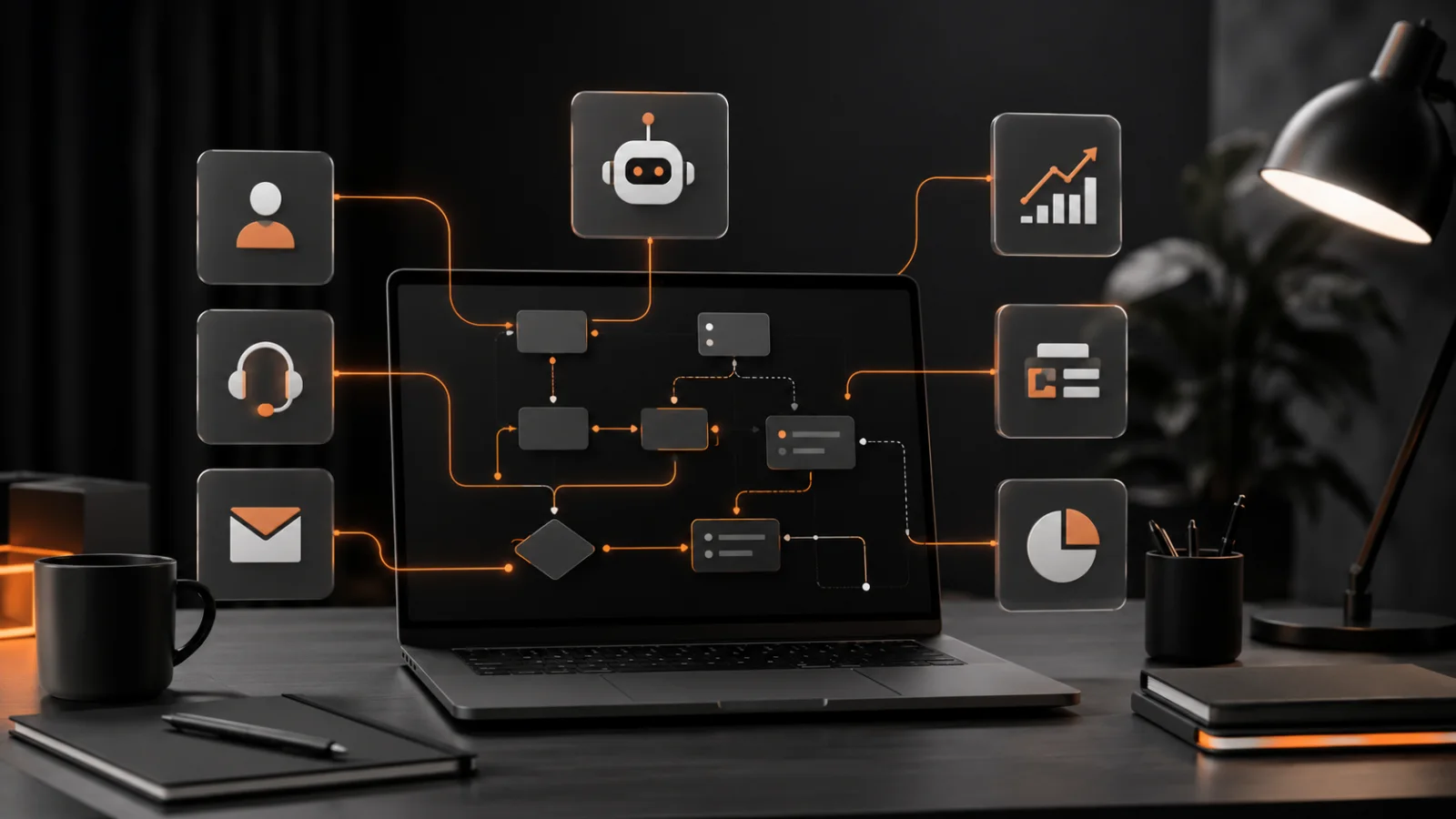
A practical agent might read a request, check CRM data, draft a response, update a record and notify the correct person.
The agent is only as good as the tools and rules around it. Without that structure, it becomes impressive in a demo and unreliable in production.
Good agents start narrow
The mistake many companies make is trying to build one assistant for everything. That creates unclear permissions, weak evaluation and messy expectations.
A better first agent handles one valuable workflow: qualify leads, summarize support threads, check project status, prepare reports or answer internal knowledge questions.
Once the first workflow is stable, the system can expand.
Where AI agents save real money
AI agents create value when they reduce waiting time, improve consistency or remove manual coordination.
Examples include customer support triage, sales research, proposal preparation, document review, invoice checking, meeting summaries and internal dashboards.
These use cases connect directly with internal AI systems because the agent needs a place to read, write and track work.
- support triage agent
- sales follow-up agent
- internal knowledge agent
- reporting agent
- document review agent
Agents need observability
If a business cannot see what an agent did, why it did it and when a person approved it, the system is not ready for serious operations.
Logs, permissions, review queues and fallback paths are not optional details. They are what make the agent trustworthy.
Implementation checklist
- 01Pick one workflow where an agent can save time without creating major risk.
- 02Define tools, data access, permissions and human approval points.
- 03Build logs so every agent action can be reviewed.
- 04Measure time saved and quality before expanding the agent.
- 05Keep sensitive decisions under human control until the workflow is proven.
FAQ
What is an AI agent in business?
An AI agent is software that can use instructions, business data and tools to complete a defined workflow with some level of autonomy.
Are AI agents safe for companies?
They can be safe when scoped properly with permissions, approval steps, logs and clear limits. Broad unsupervised agents are risky.
What should an AI agent do first?
Start with a narrow workflow such as lead qualification, support triage, reporting, document review or internal knowledge search.
Next reads
Related guides.
AI Automation Ideas
Practical AI automation ideas for growing companies that want to reduce admin work, improve sales follow-up and scale operations without adding headcount too early.

Internal AI Systems
A practical guide to building internal AI systems, dashboards and workflows that save time without creating operational risk.

Custom Software Cost
A practical cost guide for CEOs, founders and operators planning custom software, SaaS platforms, AI automation or internal business systems.